YouTube: https://youtu.be/9pd1AttqCoU
Spotify: https://open.spotify.com/episode/5meockkVLq2dcw06qbhJel?si=OTgkn-C9RMCWDkPbDOY4pA
Apple Podcasts: https://podcasts.apple.com/us/podcast/the-cheer-biz-podcast/id1596523298?i=1000770318194
As your gym grows and you start to have more teams and more classes, the reality is that you can’t coach everything. And that’s why it becomes so important to build your coaching team. And these are the three biggest things that you need to be determining before you bring on a new hire.
Hello everyone. And welcome to another episode of the cheer biz podcast. I’m your host, Dan cotton.
And today we are talking about the three criteria you need to focus on when hiring new employees. Now, before we get into the episode, please head on over to Facebook and join cheer gym owners, Facebook group, and all-star cheer coaches and owners. Make sure you’re in both of those groups.
We have really awesome discussions going on and check out next gen owners.com where you can learn more about the Academy, where we can work directly with you and your staff to help you scale your gym. So if you’ve ever learned, wanted to learn what it’s going to take to grow your gym or to bring on more employees or how to get the right employees or train them the right way, then you’ve got to check out the next generation gym owners Academy, where you can get a coach to work directly with you in your business and check out our cheer biz accelerator events. They’re absolutely amazing.
We do a deep dive on your company and identify the number one constraint to growth that you have. All right, let’s get into the episode. So it is the end of season, which means we are always in a hiring mode right now.
This is when some coaches leave. We have junior coaches who are getting ready to go to college next year. And so we have to kind of replace those people.
We have to hire a little bit more because we have our summer staff for our summer camps. We have all sorts of things going on. And so we’re back into hiring mode and I’ve been hiring people for a really long time.
And in fact, I’m not really a part of the hiring process anymore. I occasionally will do the interviews if someone else isn’t available. But for the most part, I don’t interview our staff.
I have been a big part of the creation of the questions and the process and the hiring and the training and all of those things. And over that time, I have had the opportunity to hire some really good people and some really bad people. I have had some doozies y’all.
Like if you have not followed me or the podcast for a while, I have had some of the worst people you can hire. Not the worst, the worst. I know there’s way worse out there, but I’ve had people who stole from me.
I’ve had people who tried to take athletes and start their own gym. I’ve had people who talked badly about me to clients and staff and created all sorts of drama. I’ve had people who tried to stage staff uprisings and revolts because they didn’t think they were paid enough money.
And I’ve had people who from the moment they were hired, didn’t actually work a single day, but just did private lessons and always pushed off their start date for X, Y and Z reason. And then actually had the gall to walk into my office and say, Hey, I’m going to take over your world’s team from you because I don’t think you’re running it very well. Now, granted, that was the last time they were ever in my office because I told them that they could give me their key and leave.
But let me tell you, I’ve hired some bad ones. Now most of my really bad hires were within the first five to six years of owning my gym as we were kind of figuring it out. And as we scaled and most of my bad hires came around desperation, the times where I felt like I really needed someone right now or that I couldn’t let this person get away because they were just so skilled.
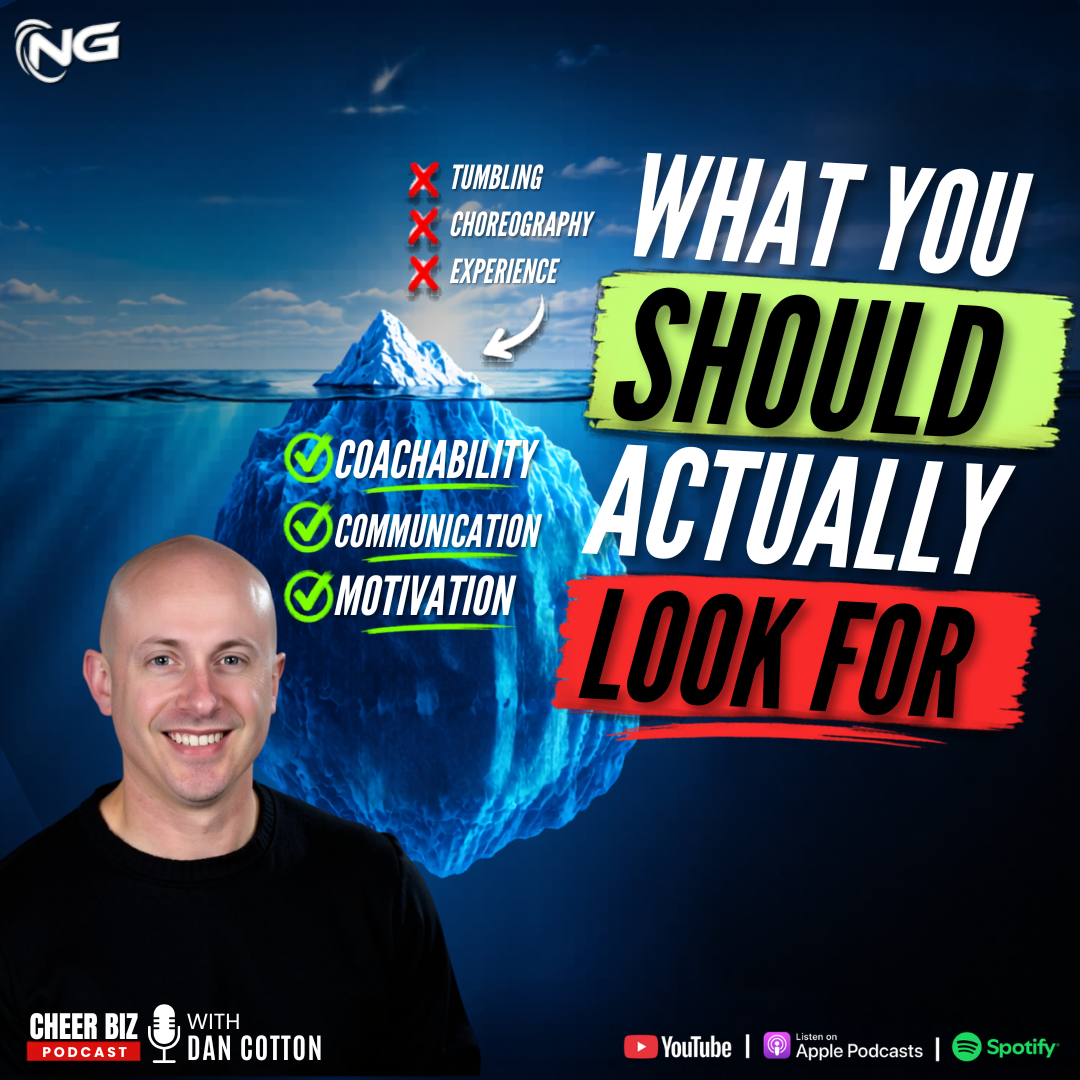
Those were the moments that I made bad decisions and I went against my gut when I should have had more confidence in knowing that they weren’t going to be the right person. So I want to talk about the top three things that you should be focused on when you’re looking for a new hire based on all of my years of experience. Number one, you have to be focused on the coach’s coach ability.
You’ve got to determine is this person capable of learning, growing and being coached. This is the number one most frustrating thing for me is when I have someone who’s an employee or I have someone who’s coaching and they believe that they have it all figured out. They are infallible, they’re perfect, they know exactly the right answer and everyone else is just really an idiot.
And those are the kind of people that you absolutely positively do not want to hire. Those are people who are not going to follow your policies because if they don’t agree with it, it’s not going to be something that they do. Those are the kind of people that are going to do things their own way, no matter what you believe.
And they’ll be great as long as it aligns with what they think is right. But the moment it doesn’t, they’re not going to do it and they’re not going to be willing to learn. And the reality is, is in cheer and in coaching in general, it’s not a matter of if they are going to need to be coached to be made better.
It’s a matter of when. If you are not learning and growing as a coach, then you are not a good coach. Like I learned something new every single year up to and including just this last weekend, Corey Ricketts and I were having a conversation at a conference and he blew my mind with multiple things in conversations and I attended his spotting class and there were things that he did when spotting that I was like, Oh, that’s really smart.
And I’ve been spotting since I was 15 years old. Like I know how to spot people. I spot all the way through standing folds, double folds, double backs.
I can spot all of them. And I was listening to him and I was like, Oh, that’s, that’s really smart. Or I’ve never tried to spot it that way.
Let’s try that out. So you can always be learning. And if you have someone you’re hiring and they’re not coachable, then you need to immediately write that person off.
Like that is a hard note. Do not hire that person. I don’t care how skilled they are.
If you have someone that is not coachable but is highly skilled, they are a bad hire. You do not want that. I would prefer someone who has less skill, who is incredibly moldable and coachable than someone who has more skill and is incapable of being coached.
So you’ve got to tailor your interview questions to suss out that information. One of the questions I like to ask people is tell me a time that a coach taught you something and what you learned from it. Number two is can they communicate? Now this is such an important factor.
We oftentimes are thinking about do they know skills? Are they capable of performing a double full or have they ever competed? But those things are actually far less important than their ability to use their mouth and explain things to an athlete. A coach who can’t communicate verbally with a variety of different approaches is not going to be a good coach. It ultimately comes down to salesmanship and communication when they’re working directly with athletes.
They also need to be able to communicate with parents. So these are really critical factors that you have to consider and I would highly recommend focusing on having your questions revolve around communication. I’m a big fan of scenario questions in an interview process, so I’m going to give them a variety of scenarios and ask them how they would handle it or how would they talk to the athlete.
I typically do one that is skill based. I’ll do one that is like attitude based and then I’ll do one that is like intercommunication skills between staff. How would they handle a circumstance? And I might even say, you know, pretend I’m that staff member and have a conversation with me because I’m trying to suss out if this person is going to be a good verbal communicator or are they going to be a pain in the butt? Are they going to be someone who is getting into hot water because they cannot use their words correctly? They cannot communicate like an adult.
So make sure that you are testing for communication skills in that initial interview process and also take the gauge off of the interview, right? If they’re sitting down and they’re awkward and they can’t talk and they’re, it’s normal to be uncomfortable in an interview, but if they’re not able to communicate back and forth with you in that setting, then that’s a huge warning sign because it’s only going to be worse when they’re in front of a class of 15 athletes or a team of 30 or a parent who’s frustrated. They’ve got to be able to have those communication skills. It’s absolutely mission critical.
My number three, and although this is number three, I think it is actually one of the most important ones to determine before you hire someone on and that is what is their primary motivation for coaching. You need to understand where this person is coming from before you hire them because it’s possible that they don’t align with your mission and oftentimes a new hire, an incoming person is going to say what they need to say to get hired. So they’ve likely looked at your mission statement.
They maybe know who you are. They know a little bit about your program, but you still need to like try and dig into that a little bit. And what I want to know is what matters the most to this person when it comes to this job.
Are they someone who is highly competitive? They have a win at all costs mentality. They want to be a world champion or a summit champion and that’s what they care about. Are they someone who is a big level athletes down? Are they a big person who’s like, it doesn’t matter.
I just want everyone to have fun. Is it someone who is just here for the paycheck? Like those are all really important factors that you need to determine because if you’re a program that is very much like we’re here to build athletes, holistically and we want to make sure that they’re getting better at their skills in a safe environment where they feel supported and loved. And we want to be competitive, but we don’t care if we win summit or all star worlds.
Like that’s great. And we’re going to work for it, but that’s not one of our high priorities. That’s not going to align with a coach who comes from the idea of like, it is a win at all costs.
I don’t care. It doesn’t matter that your grandma passed away. We have practice on her funeral.
You’ll be here or you’ll come in your attire and you will be at practice on time. Like I don’t care that is going to cause a cultural misalignment and it’s going to create problems in the future. So you need to make sure that you are really, really dialed in on what their primary motivations are.
It’s going to save you a lot of trouble down the road to include, are they just here for a paycheck? Like if there’s someone who is here because they just need a job, they need the money and that is the number one thing for them, then you actually want to know that ahead of time because that is going to be a very critical factor on whether or not they’re going to align with your program. And you may have people that you want to do that. Like there’s nothing wrong with being an employee who wants a paycheck and that’s why you’re there.
But just know that that person’s maybe isn’t going to be necessarily the extra miler or they’re not going to be the person who’s going to stay after for three hours with kids and just tumble and hang out because they just love the athletes. They’re going to be putting that on their time card and you want to know those things. Whereas I have staff who will stay at the gym until 2 a.m. just talking and hanging out with each other and they’ll tumble around and they’ll let athletes stay for an extra half hour.
Be like, yeah, work on your full, which I think is actually culturally just a complete and total aside, I think is really important if you’re looking to push into higher level skills like athletes have to feel like they can be in the gym and just develop. They don’t always need to be in a class. I love the mindset of like being a class, you know, pay the gym, being a private, those things.
But there is value in just not having coaching and just working on skills and getting better. Like you don’t always have to have a coach working directly with you. All right, everyone.
I hope you got some good value out of this discussion. I hope you can help set the tone of the things that you need to be doing in your gym, in your hiring process. And you can take these things and implement them as you bring on new staff, check out your interview questions, make sure you have these kinds of things incorporated into them.
And with that, we will catch you on the next episode.