YouTube | Spotify | Apple Podcasts
Why Your Reputation as a Gym Owner Matters Most
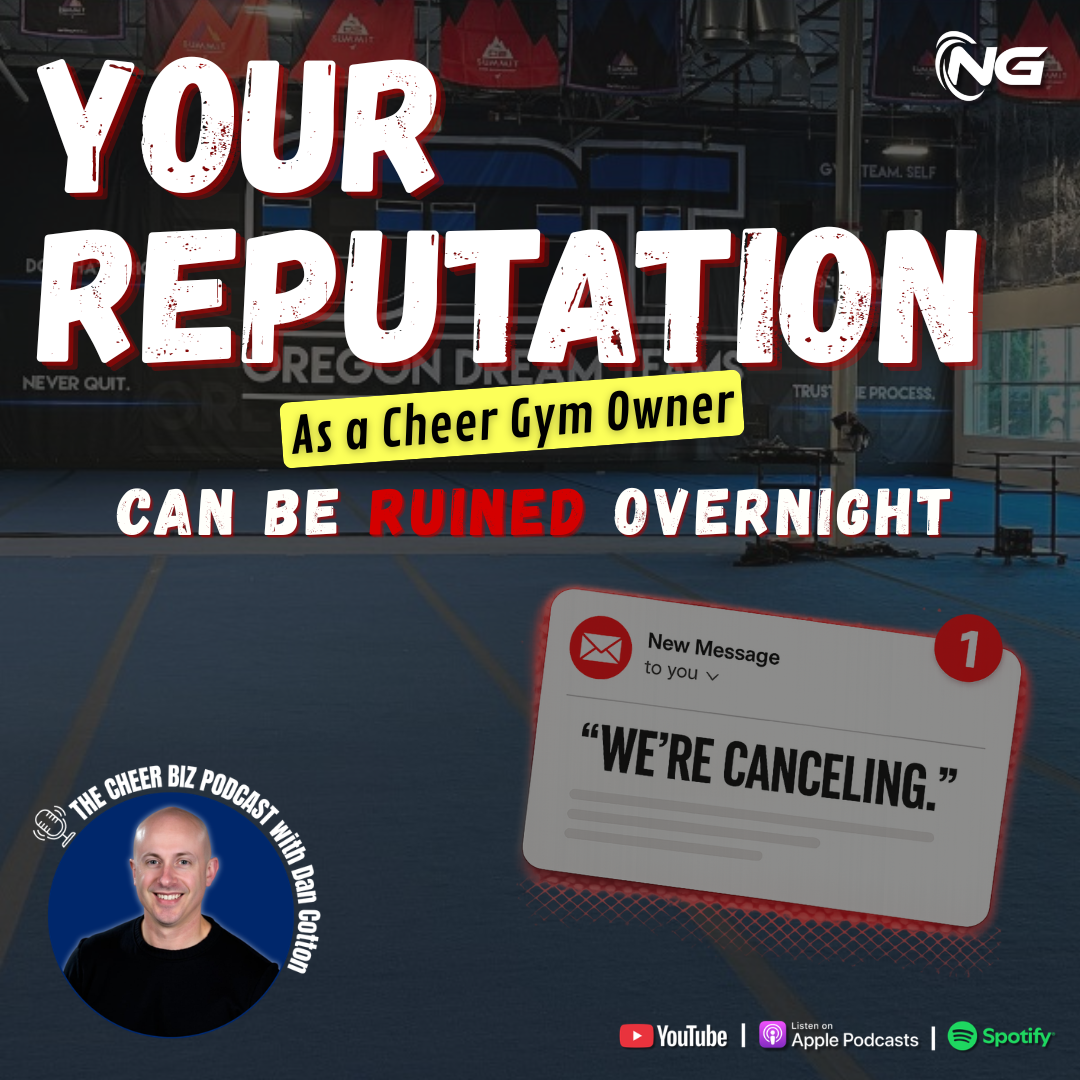
In this solo episode of the Cheer Biz Podcast, host Dan Cotton unpacks why reputation is one of the most valuable assets a gym owner can build, drawing on real stories from a summer full of travel, camps, and choreography work.
Welcome back to another episode of the Cheer Biz Podcast. Host Dan Cotton is going solo this week to talk about why a gym owner’s reputation matters so much, both with the independent providers who serve their programs and with the staff who work inside their gyms. Dan shares firsthand stories from a busy summer of Dream Camps and traveling choreography work, including a last-minute cancellation that left him scrambling and a contrasting story of a partner who communicated early and made all the difference.
A Small World With a Long Memory
Welcome back to another episode of the Cheer Biz Podcast. Host Dan Cotton opens this solo episode with a reminder every gym owner should tape to their office wall: the cheer industry is enormous in scope but surprisingly small in its network of people, and that small network is exactly why reputation matters so much.
Dan explained that the episode grew out of a summer full of traveling for Dream Camps and choreography work, during which he was repeatedly asked what it takes to get on his calendar and work with his team. Around the same time, he saw a post from Patrick of Max Out Consulting on the All-Star Cheer Coaches and Owners Facebook group making a similar point: gym owners need to do better by the independent providers who serve them. Dan said he had been feeling the same way, not because of any single bad experience this summer, but because of a pattern he has noticed over several years.
Why Providers Deserve Better Treatment
Dan laid out the core issue plainly. Choreographers, camp companies, and other service providers make their living the same way gym owners do, through the commitments people make to them. Just as a gym owner would be frustrated by a family that signs up for a season, attends a handful of practices, and then leaves without paying, providers face the same treatment from some of the gyms and programs they serve.
That dynamic, Dan said, is exactly why so many industry professionals now insist on significant deposits upfront, written contracts, and firm follow-up on payment. Delivering a service like choreography carries real upfront costs. Dan used his own trip to Missouri as an example: flights for himself and one staff choreographer ran about $900 round trip, on top of a rental vehicle and a $1,200 Airbnb, all money spent before the job even begins if a deposit isn’t collected in advance.
A Last-Minute Cancellation That Cost Him
Dan shared a story from this summer that illustrates the stakes. A program that had worked with Dream Camps for almost a decade booked 60 beds at one of his Oregon camp weeks back in November. Camps sell by the bed, so once a week fills up, Dan turns other programs away. On June 30th, just two weeks before the camp’s July 14th start date, the head coach texted to say the team could no longer attend.
By that point, Dan had already paid a deposit to the university hosting the camp, hired staff, and made other commitments based on that booking. With only 14 days to fill the gap, replacing that revenue was nearly impossible. Dan noted that Dream Camps generates roughly 98 percent of its annual revenue between June 1st and August 31st, a three-month window where every canceled spot is extremely difficult to recover. He was careful to add that gym owners and programs absolutely can cancel a service when circumstances require it. The problem isn’t canceling, it’s canceling without enough lead time for the provider to fill the gap, whether that provider is a camp company losing a bed or a choreographer left holding non-refundable flights and lodging.
How Word Travels in a Tight-Knit Field
Dan was direct about the reputational risk of being a difficult client. Gym owners who develop a name for canceling at the last minute, or for being hard to collect payment from, will find that reputation follows them. He described the choreographer and camp provider community as a world where most people know each other, even if only at arm’s length, and where stories travel fast. Dan said he has personally been in rooms where providers warn each other: be careful with that program, they canceled on me last second, or they told me they were bringing three choreographers and then cut it down to two teams at the last minute.
The long-term cost of that reputation, Dan argued, is losing access to the providers a program wants most. He believes programs are far better served by finding a choreographer or camp partner they click with and sticking with them season after season, rather than constantly shopping for someone new. As a choreographer himself, Dan said familiarity with a program’s kids, training style, and culture lets him build routines that fit them far better than working with an unfamiliar team from scratch.
Building a Reputation Your Staff Respects
Reputation with outside providers is only half the picture. Dan turned next to how gym owners treat their own staff, an area where he sees the same dynamic play out. If a gym owner constantly struggles to grow their program because staff leave after a year or two without being particularly happy on their way out, that is a signal worth paying attention to. A reputation as a difficult boss or an unpleasant place to work will directly limit a gym’s ability to attract highly qualified staff.
Dan was clear that this isn’t an argument for being an easy or low-standards employer. Gym owners can absolutely be demanding and hold high expectations. What matters is pairing those standards with fair compensation, respectful treatment, and genuine organization. Coaches and staff want to work for owners who have their operation together, who listen to feedback, and who run a tight ship. Disorganization and unclear leadership repel high-achieving coaches just as quickly as unfair pay does.
Communicate Early, Even When News Is Bad
To balance the Oregon cancellation story, Dan shared a contrasting example. Another longtime partner program had booked a large block of his Florida camp, and when their local school district released a calendar that overlapped with camp dates, the program realized about half their kids would be starting school before camp ended. It wasn’t as close to the date as the Oregon situation, but it was closer than ideal. The difference was that the program called Dan the same day they found out, explicitly wanting to give him as much lead time as possible.
Because of that early communication, Dan was able to fill the vacated spots with four other interested teams. Had they waited even two weeks, he said, there wouldn’t have been time to make it work. The lesson he drew is simple: providers aren’t upset when plans change, they’re upset when they’re left with an empty week they could have filled if they had known sooner.
When to Bring in a Business Coach
For gym owners who recognize themselves in the disorganized or unreliable examples Dan described, he offered a clear path forward: get help. Dan is a strong believer that every business owner benefits from having someone a tier above them in skill, whether that’s a mentor, a coach, or simply an accountability partner who serves as a second set of eyes on the business. He said he has personally never regretted having a business coach, even in cases where he eventually outgrew that relationship and moved on to the next mentor.
Dan tied this directly back to staff retention. When employees see an owner who is actively working to grow, who is humble enough to seek outside help, and who is making fewer of the mistakes that damage trust, they are far more likely to stay. Reputations built on canceling last minute, being slow to pay, mistreating staff, or running a disorganized operation are difficult to shake once they take hold, and they will steadily make it harder to hire and retain great people.
Dan closed the episode with a direct message to every gym owner listening: protect your reputation, because in an industry this connected, it will always precede you. Communicate honestly with the providers you hire, pay your bills, treat your staff with respect, and if you’re struggling to get organized, find a mentor or coach who can help you get there. As always, head over to the Cheer Gym Owners and All-Star Cheer Coaches and Owners Facebook groups to keep the conversation going, and keep an eye out for upcoming Cheer Biz Accelerator events happening at gyms around the country through the rest of 2026 and into 2027. Thanks for listening, and Dan will catch you on the next episode.
If you enjoyed this episode, you may also like “You Don’t Need a Rebrand“