YouTube | Spotify | Apple Podcasts
The Real Reasons Some Cheer Gyms Thrive While Others Stall
Dan Cotton, host of the Cheer Biz Podcast and owner of Oregon Dream Teams, cuts through the excuses gym owners lean on and lays out the concrete, fixable reasons some gyms are crushing it in 2026 while others can’t get off the ground.
Stop Blaming the Economy
Dan opened this solo episode of the Cheer Biz Podcast by naming the usual suspects gym owners reach for when business slows down: the economy, the president, Gen Z, even the position of the moon. None of it, he argued, is the real reason a gym is struggling while the gym down the street is thriving. He’s been attending cheer and business conferences for years, and there has never been a stretch where someone wasn’t blaming the economy. The current economy, he pointed out, is technically better than it’s been in years, even if there are signs of a bubble forming. He recalled owning a gym through the 2008 housing crash, a genuinely brutal recession, and people kept spending money on cheerleading anyway. The pattern repeats no matter what’s happening in the broader economy, which tells Dan the economy was never really the deciding factor.
He was careful to acknowledge that real external factors do exist. His own franchise location has been slowed down because the city has made it difficult to get into their building, a legitimate obstacle that has nothing to do with demand or interest. A gym renting space with only four hours of access a day faces a real ceiling. But Dan’s larger point was about ownership: most of what gym owners point to as the cause of their struggles are excuses, not causes, and the sooner an owner takes command of the factors actually within their control, the sooner things start to turn around.
Marketing Isn’t What It Was in 2022
The first concrete factor Dan dug into was marketing. He explained that a lot of gym owners are still running the same paid ad playbook that worked beautifully in 2020 through 2022 and can’t understand why it’s stopped converting. That era, he said, was uniquely easy for enrollment because families were coming out of lockdown with stimulus money in the bank and an urgent need to get their kids out of the house. That tailwind is gone. Parents today aren’t feeling that same tension; instead they’re weighing a crowded field of expensive activities and having to be far more strategic about where the money goes.
On top of that, Facebook’s algorithm has shifted, and gyms running a single static ad with no variation are leaving enrollments on the table. Dan recommended running multiple pieces of creative at once, whether that’s different photos, videos, or copy, and letting split testing show which version resonates. There’s a free version of this too: if a gym is posting regularly and a particular video pulls in a thousand-plus views, that’s a signal worth turning into a paid ad. He also stressed that straight-line marketing, the old cold-lead-to-warm-lead-to-sale funnel, simply isn’t how people buy anymore. Prospective families click an ad, bounce to Instagram, check TikTok, and circle back days later. Gyms need a real presence across YouTube, Instagram, TikTok, and Facebook, posting consistently, not twice a day with a generic AI-generated flyer, because families are consuming five, six, ten pieces of content before they ever fill out a form.
An Offer That Doesn’t Say Anything
The second factor Dan called out was the offer itself. Too many gyms present cheerleading as, essentially, “we have great cheerleading, you should sign up,” with no story, no explanation of why cheer matters, and no answer to the questions a parent is actually asking. Why should a three- or four-year-old start now? Why should a high school cheerleader add all-star to their routine? Why would a gymnast or dancer make the switch? Most gyms never answer any of it, and the entire offer collapses down to price and class hours.
Dan pointed out that competing purely on “we’re cheaper” or “we give you more hours” misses what busy families actually value. He used his own comparison: a competitor down the street might charge less and offer an hour and a half of class time, but if his gym can deliver the same result in fifty-five minutes, most parents will take the shorter commitment every time. He compared a weak offer to a grocery store shelf, a product and a price tag and nothing else, and argued that gyms need guarantees, faster paths to results, and a real value story if they want to stand out.
Charging Too Little Costs You
Pricing was next, a subject Dan has literally written a book on. His message was blunt: gyms that underprice their programs attract the most price-sensitive clients, the ones least likely to be a good long-term fit. He said he’s completely fine when a prospective client’s eyes widen at his tumbling class rates, because those families usually aren’t his ideal customer anyway. What matters is that the price reflects real value: an amazing facility, strong staff, personalized journeys, proprietary curriculum, and a full stack of supplemental offerings.
He shared that his own gym stayed busy through the summer with minimal drops, averaging around six percent monthly churn, while charging some of the highest rates in the country for tumbling. Other gyms that model similar pricing see similar results. Dan was clear that he isn’t telling every owner to copy his exact numbers, but to build pricing correctly, using tools like his pricing calculator, so the price itself signals a premium product rather than something as disposable as a $50 monthly Starbucks habit.
Just Follow the Proven System
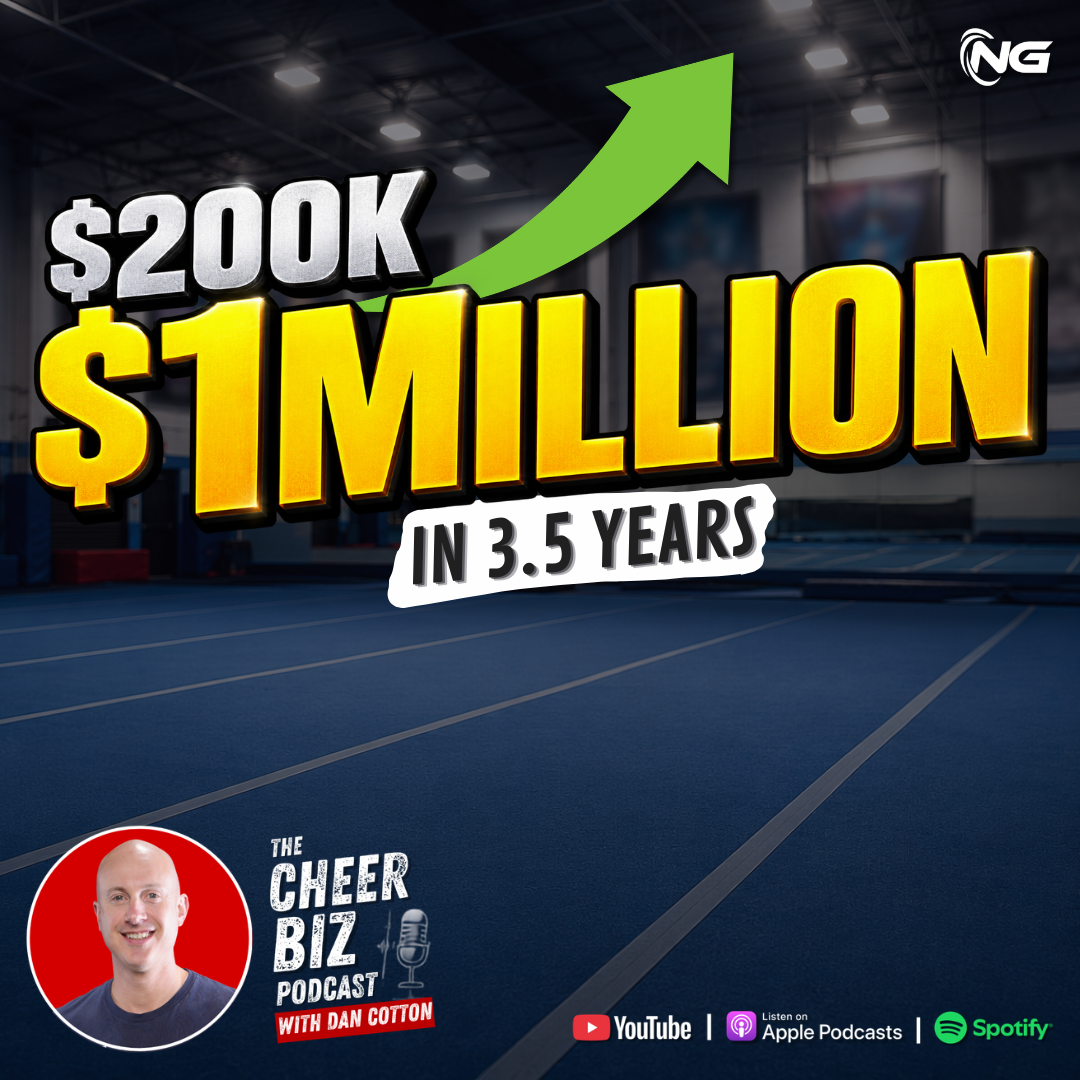
Dan’s fourth point centered on a phrase he hears constantly: “that won’t work for us.” Having worked with somewhere between three and four hundred gyms through NextGen, he’s seen a clear pattern. Struggling gyms refuse to implement the tested playbook at all. Moderately successful gyms cherry-pick pieces of it a la carte. The gyms that truly crush it are the ones that implement the system exactly as taught, without modification. He pointed to Taylor McKeig as a prime example, a gym owner who went from $200,000 to over a million dollars in annual revenue in three and a half years by following the tried-and-true techniques precisely.
He pushed back specifically on owners who insist paid trials or email marketing “won’t work for us.” Both work, he said, because the data backs it up repeatedly across hundreds of gyms. His own gym isn’t currently running a paid trial simply because it’s near capacity, while his franchise location is running one because they need more numbers in the building, a strategic choice, not a philosophical objection. The through-line: successful owners stop treating proven systems as optional suggestions and just run the plan.
Patience Pays, Impatience Costs
Dan admitted he struggles with this one himself. He’s been trying to grow enrollment for his preschool program and openly acknowledged he’s only executing on roughly a quarter to a third of what he knows should be happening, because his attention is split across too many businesses. His instinct, when a new ad or program doesn’t produce results within a week, is to scrap it and change course, even without enough data to know whether it’s actually failing.
He connected this to a bigger shift in buying behavior: people register for things far later than they used to. He recalled getting overnight camp registrations the night before camp started, almost every session. Families have been trained by Amazon to expect instant fulfillment, so they now delay purchasing decisions until the last possible moment, trickling in throughout a promotional window with a final push right before the deadline. Gyms that don’t build real scarcity and urgency into their offers, and then panic and pull a promotion before that late surge even has a chance to happen, are cutting off their own results before they materialize.
Why a CRM Changes Everything
The final factor Dan raised was the reliance on spreadsheets and disconnected tools instead of a real CRM. He was candid that a system like his own product, NextGen Engine, is genuinely frustrating for the first three months while owners learn it, and then becomes a game changer. A CRM lets a gym manage every external contact, text and email them, and keep every conversation in one place, rather than losing replies into a one-way notification system.
He singled out the gap in tools like iClassPro and JackRabbit: they can push out a text or email blast, but if a family replies, that reply often goes nowhere, and the conversation dies. Since converting a lead takes real back-and-forth conversation, that gap matters. Dan said every gym he’s watched actually commit to using a CRM the way it’s built, even if all they do is text back people who opt in on their website, sees a real, often dramatic increase in enrollment.
Take Ownership and Follow the Plan
Dan closed by softening the directness of the episode with why he pushes so hard on this topic: he’s tired of hearing from gym owners in tears, feeling like they’re failing and can’t make ends meet, when a clear, tested path forward already exists. He wants every gym owner paying themselves a livable wage and every coach able to make real money doing the job, and he believes that’s achievable the moment owners stop reaching for excuses and start studying what the gyms that are crushing it are actually doing differently.
Before wrapping up, Dan reminded listeners that the Cheer Biz Accelerator has one more 2026 event with seats remaining, hosted at his own facility, Oregon Dream Teams, this November. Attendees can learn directly from Dan and see firsthand how his gym operates. He thanked listeners for tuning in and invited everyone to join the conversation in the Cheer Gym Owners and All-Star Cheer Coaches and Owners Facebook groups, where these strategies get discussed in more depth.