YouTube | Spotify | Apple Podcasts
Why AI Can Never Replace Your Real Business Coach
Dan Cotton, host of the Cheer Biz Podcast and a self-described AI super fan, explains why leaning on AI as a substitute for real business coaching is quietly costing cheer gym owners money, clients, and good decisions.
An AI Super Fan Sounds the Alarm
Dan Cotton opened this episode of the Cheer Biz Podcast with a warning that surprised even him to be giving: despite being what he calls an AI super fan, he wanted to be crystal clear that AI is absolutely not a substitute for a real business coach. Before getting into why, he pointed listeners to the Cheer Gym Owners and All-Star Cheer Coaches and Owners groups on Facebook for ongoing discussion, teased upcoming resources on using AI more effectively in gym businesses, and reminded owners that the final 2026 Cheer Biz Accelerator event is happening in November at Oregon Dream Teams — with additional events already on the calendar for 2027 for gym owners who want hands-on coaching rather than an algorithm’s best guess.
From there, Dan got into the heart of the episode: why AI, no matter how advanced, cannot do the job of an actual business coach for a cheer gym owner — and the real, costly examples that convinced him of it.
AI Doesn’t Actually Know Your Business
Dan explained that when a gym owner opens a blank chat with an AI tool and asks for the best ways to grow their gym, the AI isn’t drawing on deep, verified expertise. It’s essentially acting as an advanced search engine, pulling from whatever is publicly available online — industry blogs, forum posts, scattered advice from various sources — and synthesizing an answer that sounds confident but is often built on shaky foundations. Even asking AI to specifically pull from Dan’s own podcast content doesn’t solve the problem the way people assume. Rather than processing the full transcripts of the more than a thousand hours of content Dan has produced over five years, most AI tools will default to skimming episode titles and descriptions to save time and computing power, building a shallow foundation of knowledge rather than a genuine one.
Dan noted that more sophisticated setups are technically possible — some companies have built custom systems capable of deeper analysis — but that level of infrastructure is well beyond what the average gym owner is doing when they open a chat window and ask for advice.
When AI Gave Dan Bad Advice on a Real Parent Conflict
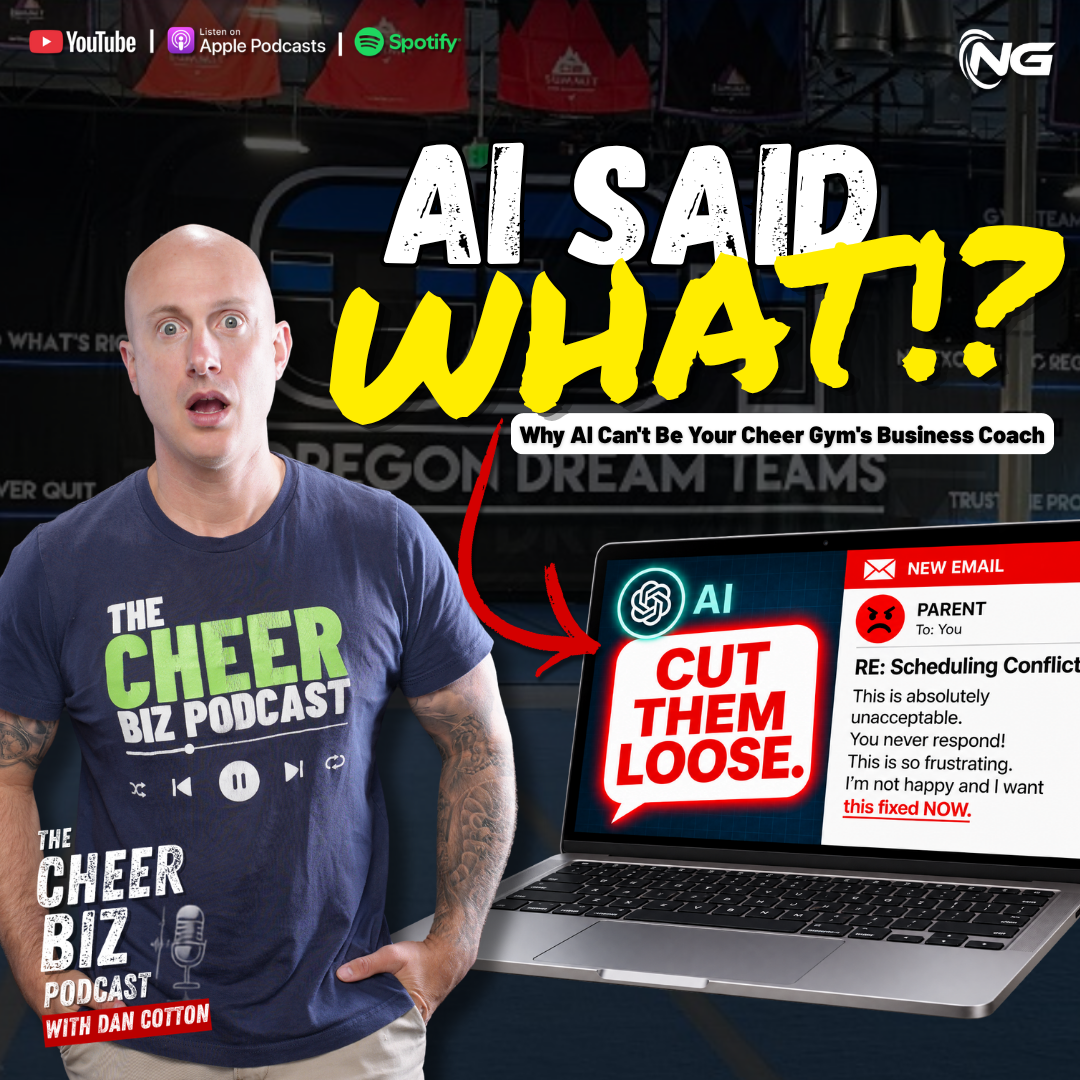
To make the risk concrete, Dan shared a recent personal example. A frustrated parent had been sending a barrage of emails and requesting a same-day phone call before practice. Dan fed the situation to his AI tool while he was still frustrated himself, partly to help process his own emotions. The AI’s recommendation was blunt: don’t respond, don’t call, ignore the request entirely and consider removing the family from the program.
Dan found the advice surprising enough that he second-guessed it — and ultimately decided to call the parent directly instead. That conversation let him set clear expectations, resolve the underlying issue, and keep the athlete enrolled without damage to the family relationship or the gym’s reputation. Had he followed the AI’s recommendation, he believes he likely would have lost the client and risked negative reviews. The AI, he pointed out, wasn’t actually reasoning through the situation — it was mirroring his frustrated tone back at him and validating what he wanted to hear in the moment, which is a very different thing than sound business judgment.
When Bad Data In Meant a Bad Budget Out
Dan’s second example came from a client who had been experimenting with AI on her own. She fed the tool her iClass reports, revenue, and expenses and asked it to build her tuition budget. The output looked polished and the process felt fast — until they reviewed the numbers together and found the pricing was completely wrong. Had she implemented it, she would have lost money hosting her teams.
The root cause was that she had given the AI her previous season’s pricing instead of running it through the gym’s actual pricing calculator, so the tool built a forecast on outdated numbers. Compounding the problem, her spreadsheet had multiple tabs, and the AI only analyzed the first one — missing critical cost comparisons entirely and confidently presenting an incomplete picture as a sound plan. As Dan put it, it’s a textbook case of garbage in, garbage out: AI can only work with the data and context it’s given, and a narrow context window means it can miss things a human coach would catch immediately.
AI Still Doesn’t Understand People
Dan’s third concern is less about data and more about human nature. AI, he explained, doesn’t actually understand human behavior — it can only reflect patterns in whatever information it’s been given. Feed it a flawed premise about how people or athletes behave, and it will build advice on top of that flawed premise without the lived experience to question it. Some AI tools, he noted, do push back on requests that cross ethical or legal lines, but that guardrail is different from genuinely understanding people, coaching staff, or athlete families the way an experienced human coach does.
This is why AI-generated copy and advice often carries a certain generic, roboticized quality: it hasn’t lived through the specific, messy, emotional realities of running a gym. It can be a useful starting point, Dan said, but it always needs a human’s judgment applied on top.
Use AI as a Tool, Not a Coach
None of this means gym owners should avoid AI altogether — quite the opposite, Dan said. He uses AI constantly in his own business, from managing Google Ads campaigns to building an app for his Next Gen Academy program, and believes gyms that aren’t using AI in some capacity are working harder than they need to. The distinction he drew is between using AI to execute and augment — evaluating data, speeding up computerized tasks, handling coding and repetitive work — versus using it to make judgment calls that require real human understanding.
Dan compared skipping AI entirely to still mailing paper flyers instead of sending emails: the old way technically works, but it’s needlessly slow. The opportunity with AI, he said, is using it to save time, energy, and effort on the tasks that don’t require deep human judgment, freeing up more time for the decisions that do.
Wrapping Up
Dan closed the episode with a direct message: stop using AI as your business coach. What it offers, even when it sounds confident, is often the simplest, most generic version of advice compiled from limited or secondhand information — not the judgment of someone who has actually run a cheer gym. For real strategic guidance, he encouraged listeners to seek out an actual expert, and invited gym owners to join him at a Cheer Biz Accelerator event for that hands-on coaching. He also thanked listeners for tuning in and invited them to share what topics they’d like covered on future episodes, and to keep the conversation going in the Cheer Gym Owners and All-Star Cheer Coaches and Owners Facebook groups.
If you enjoyed this episode, you may also like “The Biggest Business Shift Is Already Here”